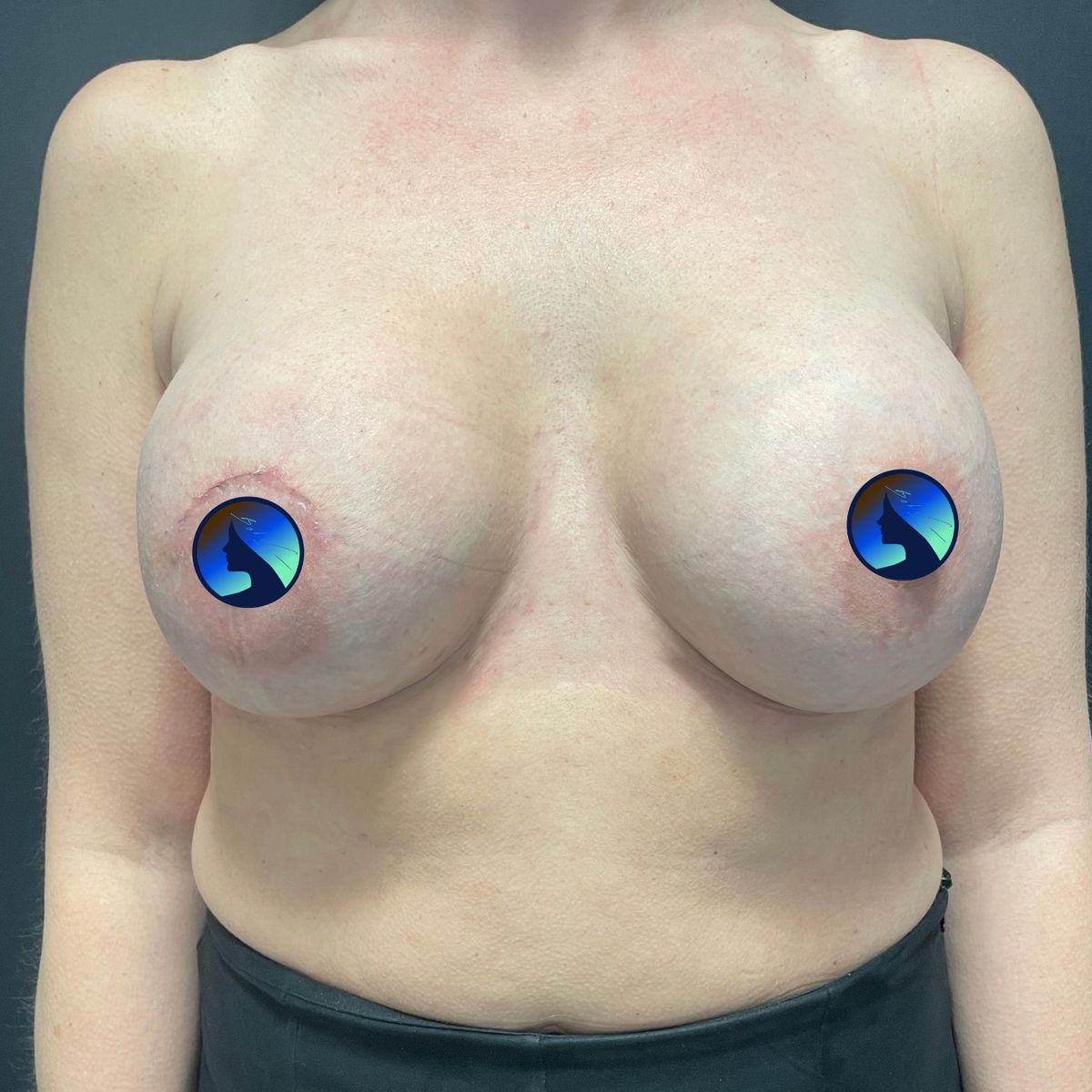
Sagging breasts (Grade 1 ptosis)
In cases of mild breast sagging, simply filling the breast with an implant—ideally using an endoscopic technique—is sufficient to avoid visible scarring.
A modern and precise breast augmentation method performed through a tiny incision in the armpit. It ensures a natural shape, no visible scarring on the breasts, and minimal disruption to the anatomy.

In cases of mild breast sagging, simply filling the breast with an implant—ideally using an endoscopic technique—is sufficient to avoid visible scarring.
The transaxillary (endoscopic) technique allows for breast augmentation without any visible scars on the breasts themselves, while preserving their natural shape.

The "transaxillary" technique, sometimes called endoscopic, is an excellent and my favorite method for breast augmentation. It leaves no visible scars, and the only short incision is invisible to anyone because it is well-hidden in the armpit. It is a precise and short procedure, particularly recommended for patients with thin skin and when the inframammary fold is not strongly marked. Over 90% of my primary breast augmentations are performed precisely via the armpit approach. It is also an excellent technique for patients undergoing gender transition, precisely because they receive a symbol of femininity without a trace of surgical intervention in the form of a scar.


BeforeAfterEndoscopic breast augmentation with periareolar pexy

BeforeAfterEndoscopic breast augmentation with periareolar pexy

BeforeAfterEndoscopic breast augmentation with periareolar pexy
Detailed assessment of breast shape, size, proportions, and tissue quality. Determining the procedure type and scope: breast augmentation, mastopexy (breast lift), breast reduction, symmetrization, fat grafting, or a combination approach. In the case of breast augmentation—selecting the optimal size, shape, and implant type, as well as discussing the surgical placement technique.
Medical photography, required preoperative diagnostic lab work, and breast imaging (most commonly a breast ultrasound). Final confirmation of the surgical scope.
The procedure is performed under general anesthesia (epidural anesthesia is exceptionally rare). Procedure duration depends on the type and scope of the surgery, followed by a post-operative observation period.
Evaluation of the healing process, wound assessment, and breast positioning. Depending on the procedure performed—dressing changes and updated post-operative care instructions.
Wearing a specialized supportive surgical bra and, in the case of implant augmentation, an implant stabilization belt if clinically indicated.
Regular check-ups throughout the healing phase to monitor wound recovery, breast contour, and implant positioning. Implementation of supportive conservative therapies if required.
Following early recovery, periodic check-ups take place every 3 months, including monitoring implant integrity and position for augmented patients. A final follow-up including a breast ultrasound is conducted at 12 months to formally conclude treatment.

~ Aleksandra

~ Anna Dudzik

~ Wiktoria

~ Justyna Błocka

~ Jolanta
The entire procedure is performed through a single short, precise incision hidden in the armpit, ensuring that no marks or scars remain on the breasts themselves.
The consultation is a time for your questions and a thorough assessment of treatment options.